NEWS

Spider-Web Dress and Cleopatra Vibes: Zendaya Stuns Shanghai

Zendaya turned heads at the Shanghai premiere of Spider-Man: Brand New Day, presenting a striking Cleopatra-inspired beauty look and a dramatic fashion statement on the red carpet. The 29-year-old actress appeared at the event alongside her husband, 30-year-old actor Tom Holland.
The actress unveiled a new hairstyle featuring sleek, waist-length dark hair styled straight with a bold, blunt fringe. Continuing the Egyptian-inspired theme, her makeup featured a dramatic smoky eye, adding depth and intensity to the overall look.
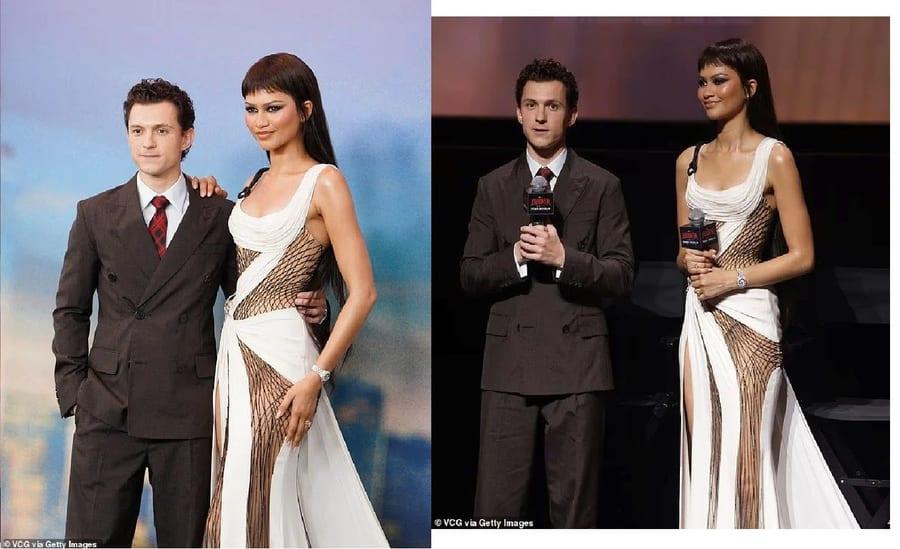
Known for her creative approach to fashion storytelling, Zendaya once again embraced method dressing, choosing a gown inspired by the film’s iconic spider theme. The custom look featured sparkling black web-like details crossing over flowing white fabric, completed with a striking silver brooch at the waist.

Spider-Web Dress and Cleopatra Vibes: Zendaya Stuns Shanghai photo 1
Spider-Web Dress and Cleopatra Vibes: Zendaya Stuns Shanghai photo 2

The ensemble was further enhanced by a daring thigh-high slit, highlighting the silhouette of the gown. She completed the look with white high heels, a diamond watch, and subtle stud earrings, balancing statement details with refined elegance.
Before the screening, Zendaya and Tom Holland joined the stage to present an exclusive poster and promote Spider-Man: Brand New Day, which is scheduled for worldwide release on July 31.
Zendaya’s latest appearance once again demonstrates how fashion, jewelry, and cinematic storytelling continue to influence modern red carpet moments.


Source: News.am

"Forgot to Zip Up?": A New Gen Z Fashion Trend Is Driving Parents Wild

Stylized "undone" jeans are taking over Gen Z wardrobes. Parents are shocked, and fashion brands—from high-street labels to luxury houses—are struggling to keep up with demand.
Initially popularized by influencers and celebrities, the trend quickly gained momentum. Today, many brands are introducing jeans with intentionally exposed waistbands or asymmetrical closures, transforming what was once considered a wardrobe mishap into a bold fashion statement.
For young consumers, the appeal lies in individuality and confidence. Many members of Generation Z embrace unconventional styles as a way to express their personality, creativity, and independence.

"Forgot to Zip Up?": A New Gen Z Fashion Trend Is Driving Parents Wild photo 1

The trend has also reignited the ongoing conversation between generations. While many parents and older consumers view the look as unusual or impractical, fashion historians point out that nearly every generation has embraced trends that were once considered controversial—from ripped denim and low-rise jeans to oversized silhouettes.
Whether admired or criticized, the unbuttoned jeans trend highlights how fashion continues to evolve through experimentation and shifting cultural values. Fashion is more than clothing—it is a form of identity, self-expression, and the confidence to challenge convention.

Gucci Breaks the Main Taboo of the Luxury Industry: Why the Fashion House Is Lowering Prices

In the world of haute couture, it is customary to believe that luxury is immune to conventional business laws. While mass manufacturers fight for customers through cost optimization and price competition, luxury brands have traditionally survived on creativity, exclusivity, and continuous price increases, writes FT.
This is why the crisis-management strategy of parent company Kering under former Renault top executive Luca de Meo, who took the helm of the holding company last September, came as a shock to the industry.
Since de Meo's arrival, Kering shares have risen by a fifth, significantly outperforming the market's main barometer, LVMH. This success was achieved not through mythical designer inspiration, but through strict operational and financial discipline.
The measures taken by the new management would be more fitting for a large supermarket chain, such as Britain's Tesco, than an elite fashion house:
Kering sold its cosmetics assets to L'Oréal for €4 billion and revised its commitments to buy out the remaining 70% stake in Valentino.
The company also closed underperforming boutiques and optimized overhead costs.

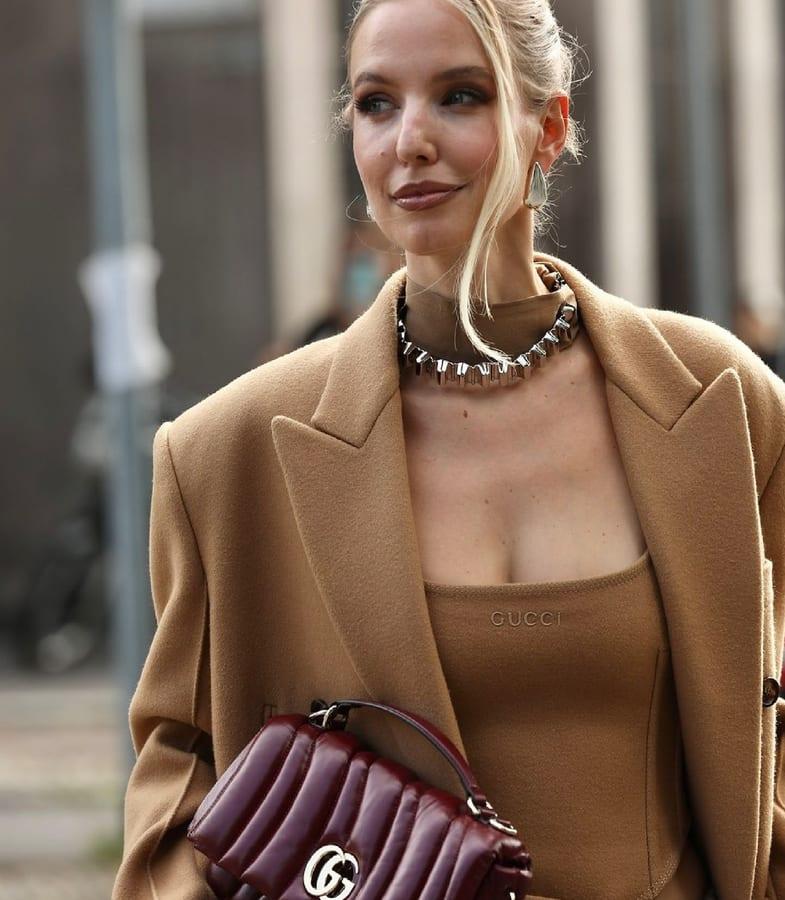
Gucci Breaks the Main Taboo of the Luxury Industry: Why the Fashion House Is Lowering Prices photo 1
Gucci Breaks the Main Taboo of the Luxury Industry: Why the Fashion House Is Lowering Prices photo 2

Lowering Prices to Save Sales
The main sensation was that Kering directed the freed-up funds not into marketing, but into... lowering prices on a portion of its products.
According to Bernstein analysts, at the beginning of May, the price of the popular Gucci Mercato Tote Bag was slashed by 20–25% overnight.
For traditional luxury, this is a taboo. Purists argue that such a strategy has a short shelf life, since brands cannot endlessly cut costs without damaging their reputation.
However, the move appears to have paid off: price cuts helped halt the sales slump in a weak market while simultaneously increasing the company's operating margin.
New Audience and the Trend Toward "Accessible Luxury"
Historically, selling exceptionally expensive products to the super-rich was considered a more reliable business model than targeting the middle class.
However, in the current market, "accessible luxury" is gaining momentum, attracting buyers increasingly discouraged by endless price increases in the ultra-premium segment.
Nevertheless, while the market is weathering a storm, Luca de Meo's pragmatic approach looks unexpectedly fresh — and even avant-garde — for an industry that has traditionally positioned itself above basic economic principles.
By cutting excess costs and attracting new buyers through more accessible pricing, Gucci is expanding its audience at a time when competitors risk losing customers.
The move raises a broader question for the luxury industry: Can more accessible pricing become a tool for protecting growth without undermining exclusivity and brand value?

Source: News.am

The “Wolf in Cashmere” Has a Sense of Humor: How Bernard Arnault Changed His Image with a Single X Post

For the past twelve years, Bernard Arnault—head of LVMH, owner of Dior, Louis Vuitton, and Tiffany, and one of the most powerful figures in luxury—has tried to soften his public image and counter the perception of him as a ruthless capitalist, The New York Times reports.
He invested hundreds of millions of dollars in the Fondation Louis Vuitton in Paris, sponsored the 2024 Olympic Games, highlighted the taxes he pays and the jobs LVMH creates, and occasionally gave interviews. Yet the image persisted.
Arnault was still described as “cold,” “ruthless,” and “inscrutable,” with nicknames such as “the wolf in cashmere,” “the Terminator,” and “the Machiavelli of finance.”
As it turned out, all he really needed was an account on X.
Self-Deprecation as the Ultimate Weapon
The turning point came with a self-deprecating three-page open letter titled “Thank You,” posted by the LVMH press office on X. Arnault was responding to a six-part investigative series by Le Monde about his family, succession plans, political connections, and business strategy.
Instead of attacking the journalists, Arnault poked fun at details presented as “gotcha” revelations—including rumors about Hermès ties, his employees’ appearance, and family lunches.
The move transformed controversy into satire and revealed something rarely associated with Arnault: a sense of humor.
Almost overnight, the image of the distant corporate titan became more human.
The post has garnered nearly 8 million views, with praise from billionaire investor Bill Ackman, British politician Nadhim Zahawi, and cultural critic Louis Pisano.
A Debut at Age 77
The reaction encouraged an even more unusual move. On July 27, at age 77, Arnault created his personal X account and thanked those who had supported his letter.
“I was deeply touched by the many messages you sent me following my open letter to Le Monde. I wanted to thank each and every one of you, directly and personally, here on X.”
That post has already surpassed 11.5 million views.
According to Antoine Arnault, Bernard’s eldest son and LVMH’s head of image, both the letter and the decision to join X came entirely from his father.
For an executive who historically rarely responded to press criticism, it represents a remarkable change in communication strategy.
A Lesson for the Luxury World
The luxury industry has long relied on mystique, control, and carefully managed images. But Arnault’s experience suggests that authenticity can be more powerful than perfection.
By laughing at himself and stepping directly into the conversation, he allowed audiences to see the person behind the corporate image.
As luxury faces slowing sales and growing consumer skepticism, the lesson is simple: sometimes the best image strategy is simply to show humanity.

Source:
NEWS.am